What Is High-Altitude Platform Stations (Haps) Explained
1. HAPS occupies a sweet spot between Earth and Space
Forget the binary of ground towers versus orbiting satellites. Platform stations operating at high altitudes operate in the stratosphere. Typically, they are between the range of 18 to 22 kilometers above sea level — a layer of atmosphere at a level that is so steady and secure that an aircraft built to perfection can keep its location with a remarkable precision. The altitude is sufficient to provide massive geographic footprints from one vehicle, but close enough to Earth which means that the latency of signals is minimal and the system doesn’t require the rigors of the radiation conditions that are characteristic of space. It’s an extremely under-explored area of sky and the aerospace industry is just making the effort to fully explore it.
2. The Stratosphere is more tranquil than You’d Expect
One of the most surprising things about stratospheric travel is how stable the atmosphere is in comparison to the turbulent troposphere below. Winds at stratospheric cruising altitudes are comparatively gentle and uniform, which matters enormously for station keeping — the capacity of a HAPS vehicle to stay in the same position above the area it is targeting. for earth observation or telecommunications missions, even a few kilometres off position will affect the quality of coverage. Platforms designed for real station-keeping, such as those designed by Sceye Inc, treat this as a design element rather than as an added-on feature.
3. HAPS Stands for High-Altitude Platform Station
The term has merits a thorough explanation. Platform stations at high altitude are defined by ITU (International Telecommunications Union) frameworks as a station located on any object at an altitude between 20 and 50 kilometers in a specified, nominal static position in relation to Earth. This “station” component is intentional and they’re not research balloons floating across continents. They’re telecommunications and observation infrastructures, housed on a station and performing ongoing missions. They are less like planes, but more as low-altitude, reuseable satellites with the ability to return, be repaired or redeployed.
4. There are many different vehicle types under the HAPS Umbrella
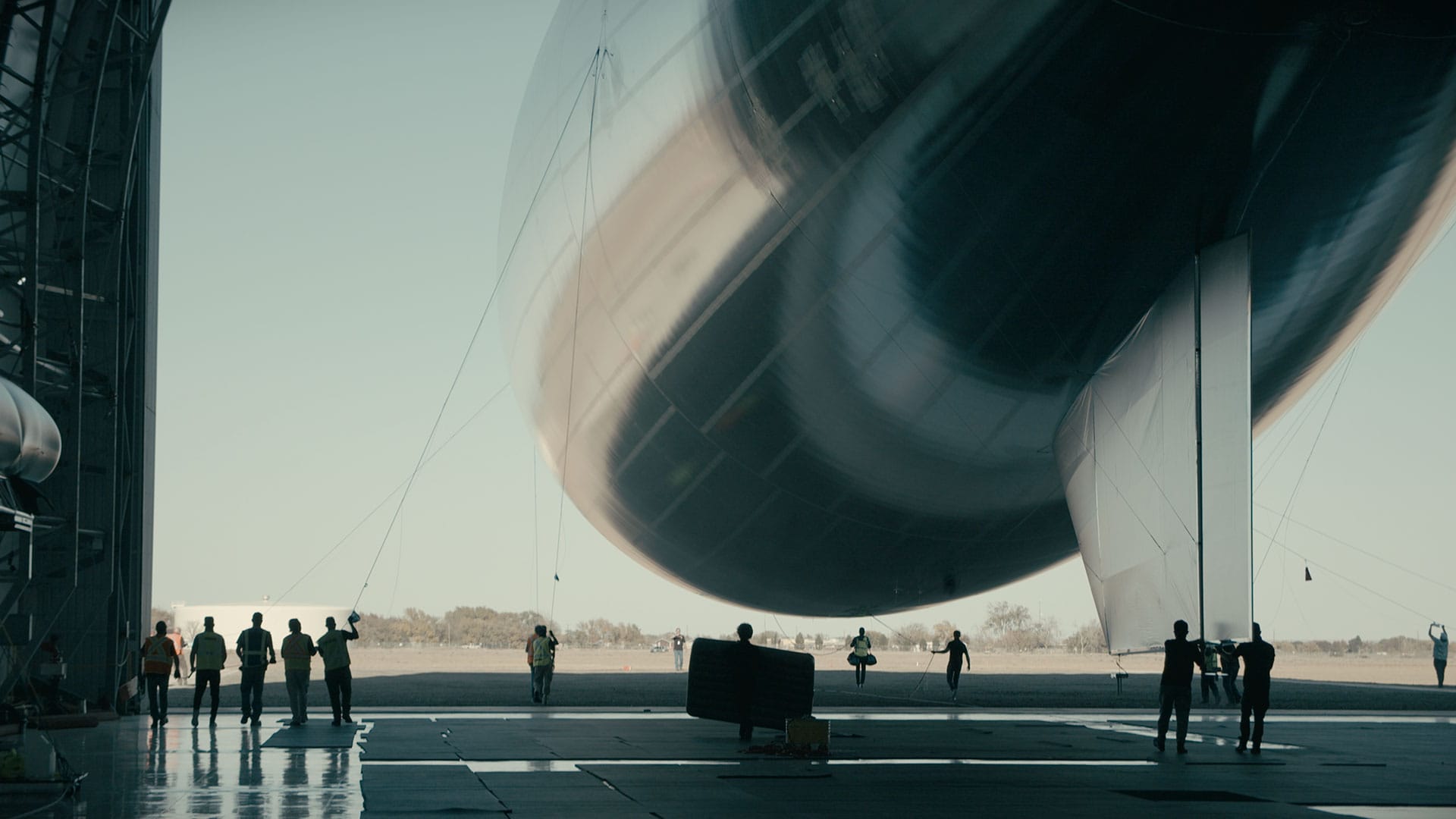
Not all HAPS vehicles are alike. The grouping includes solar-powered fixed-wing aircraft, airships with lighter-than-air weights, and tethered balloon systems. Each of them has its own trade-offs regarding capacity of payloads, endurance, and price. Airships, as an example, allow for heavier payloads to be carried over longer durations due to buoyancy taking most of lifting leaving solar energy to power stations, propulsion as well as onboard equipment. Sceye’s solution employs a lighter aeroship design specifically designed to maximize load capacity and mission duration – a deliberate architectural option that differentiates it from fixed-wing competitors chasing altitude records that carry only minimal burden.
5. Power Is the Central Engineering Challenge
Keeping a platform aloft in the stratosphere for weeks or months without refueling it is solving the energy equation in a way that has limited margin for error. Solar cells can store energy during daylight hours, but your platform will have to last through the night without power stored. This is where battery energy density becomes vital. Technology advancements in lithium-sulfur chemistry — with energy density at or near 425 Wh/kg have made stratospheric endurance mission increasingly viable. When combined with improved solar cell efficiency, the objective is to create a closed power loop with the ability to generate and store enough energy in each day to continue full operation for a long time.
6. The Footprint Coverage Is Huge If compared with Ground Infrastructure
A one-time high-altitude platform station situated at 20km altitude could make a footprint on the ground of several hundred kilometres in diameter. A typical mobile tower only covers only a few kilometres. This gap in coverage is what makes HAPS particularly useful in connecting isolated or under-served regions where the development of infrastructure on land is economically not feasible. A single stratospheric vehicle can accomplish what would normally require hundreds or even thousands of ground-based assets — making it one of the more convincing solutions proposed to address the ongoing global connectivity gap.
7. HAPS can carry multiple Payload Types simultaneously
Contrary to satellites, which typically have a set mission profile after launch time, stratospheric platforms can carry multiple payloads as well as be transformed between deployments. A single vehicle may carry a telecommunications antenna to deliver broadband, and sensors to monitor greenhouse gases, wildfire detection, or surveillance of oil pollution. This multi-mission versatility is just one of the more economically compelling arguments for HAPS investment. It is the same infrastructure can serve connectivity and monitoring of climate, instead the needing separate equipment for every function.
8. The Technology Enables Direct-to-Cell and 5G Backhaul Applications
From the perspective of telecoms and a telecoms point of view, what the thing that makes HAPS particularly interesting is its compatibility with existing ecosystems for devices. Direct-to-cell technology allows smartphones connectivity without the need for additional hardware, while the platform acts as a HIS (High-Altitude IMT Base Station) (which is really a cell tower in the heavens. It can also act as 5G backhaul, connecting ground infrastructures to networks that are larger. Beamforming technology permits users to control the signal precisely to the areas where there is demand instead of broadcasting across the board, improving spectral efficiency considerably.
9. The Stratosphere Is Now Attracting Serious Investment
A niche research field a decade ago has been able to attract substantial investment from major telecoms companies. SoftBank’s collaboration with Sceye in the development of a national HAPS infrastructure in Japan with the intention of launching pre-commercial services in 2026, is one of the biggest commercial commitments to connectivity in the stratosphere to the present. It is a signal of a shift in HAPS being viewed as an experimental system to being considered a deployable as a revenue-generating infrastructure- a confirmation that will benefit the entire sector.
10. Sceye Represents a New Concept for a Non-Terrestrial Infrastructure
Established by Mikkel Vestergaard and based out of New Mexico, Sceye has positioned itself as a serious longer-term player within what is truly a space frontier. The company’s desire to blend durability, payload capacity and multi-mission capabilities reflects an understanding that stratospheric platforms could become a long-lasting layer of global infrastructure that is not a novelty or a gap-filler, but a genuine third layer between the terrestrial network and satellites on orbit. Whether for connection, climate monitoring or even disaster response, high altitude platforms are beginning to look less like a novel idea and more like a necessary element in how humanity observes and communicates with its planet. Have a look at the top rated what does haps stand for for website info including 5G backhaul solutions, sceye haps project updates, Stratospheric platforms, Sceye HAPS, sceye haps airship status 2025 2026, Direct-to-cell, Monitor Oil Pollution, softbank satellite communication investment, what is a haps, Sceye Inc and more.
Wildfire and Disaster Detection From The Stratosphere
1. The Detection Window is the most Important Thing You can Extend
Every major disaster comes with a moment — which may be measured in minutes, or sometimes even hours when the early awareness would have changed the course of action. A wildfire discovered when it exceeds half a hectare in size is a containment problem. A fire that is detected when it covers more than fifty hectares is a crisis. A gas leak from an industrial facility that is detected in the first twenty minutes can be dealt with before it turns into a public health emergency. The same release discovered three hours later through the use of a ground report, or even a satellite flying by during its scheduled trip, has dispersed into a problem with no solution that is clear. Expanding the detection windows is possibly the most valuable aspect that a better monitoring infrastructure could provide, and the constant stratospheric monitoring is among the few options that can alter windows in a meaningful manner, rather than marginally.
2. It is becoming harder for wildfires for the Forest Service to Monitor, despite existing infrastructure
The volume and frequency wildfires in recent years has outpaced the monitoring system designed to track the fires. Ground-based detection networks – watchestowers, sensor arrays ranger patrols have a limited coverage and operate too slowly to spot fast-moving flames in the beginning stages. Aircraft response is effective but expensive, weather-dependent and is reactive, not anticipatory. Satellites pass over any given location on a schedule measured in hours, which means that a blaze that ignites to spread, then gets a crown, and continues to grow between passes will not give any warning at all. The combination of more fires speedier spread, increased rates of spread triggered in part by dry conditions, increasingly complicated terrain can create a monitoring gap that conventional approaches are not able to close structurally.
3. Stratospheric Altitude Provides Persistent Wide-Area Visibility
A platform operating at a height of 20 kilometres above surface has the ability to provide uninterrupted visibility over a large area of ground covering hundreds of kilometres with fire-prone regions, coastlines as well as forest margins and urban edges simultaneously and without interruption. As opposed to aircrafts, it does not require fuel refills. Contrary to satellites, it does not disappear over the horizon on it’s revisit cycle. For wildfire detection in particular, this persistent wide-area visibility means that the platform is observing when fire starts, watching when initial spread happens, and watching as the behavior of fire changes and provides a continuous streaming of data, rather than a sequence of snapshots which emergency managers have to make interpolations between.
4. Thermal and Multispectral Sensors can detect fires before Smoke is Visible
One of the most efficient fire detection techniques don’t need to wait to see visible signs of smoke. Thermal infrared sensors can detect heat patterns that can be interpreted as evidence of ignition even before the fire has developed any visible evidence (for example, identifying hotspots in dry vegetation, burning ground fires under forest canopy, and the early thermal signature of fires just beginning to spread. Multispectral imaging is a further tool through the detection of changes in vegetation condition, such as stressing on the moisture Drying, browningwarning signs of increased risk of fire in particular areas before any ignition event occurs. A stratospheric system that incorporates this sensor combo gives prompt warning of active fire and an underlying prediction of where the next ignition is likely to occur, which is a qualitatively distinct type of situational awareness than conventional monitoring delivers.
5. Sceye’s Multipayload approach combines detection With Communications
One of the most common complications of major disasters that the infrastructure they rely on for communication — mobile towers, power lines, internet connectivity and so on — is often one of the first items to be destroyed or overwhelmed. A stratospheric base that has both emergency detection sensors as well as a telecommunications payloads solve this issue by using a single vehicle. Sceye’s design approach to mission planning is to consider connectivity and observation as different functions instead of competing ones, which means the similar platform that detects the emerging wildfire will also be able to provide emergency communications to personnel at the ground who’s terrestrial networks are dark. The cell tower in the sky doesn’t just watch the destruction but it also keeps people connected to it.
6. In the event of a disaster, detection extends far beyond Wildfires
Wildfires may be one of many compelling applications that require constant monitoring of stratospheric conditions, this same platform’s capabilities can be utilized to a broader array of scenarios for disaster. Floods can be monitored through the evolution of floods across river systems and coastal zones. Earthquake aftermaths, which include compromised infrastructure, blocked roads and people displaced- benefit from rapid wide-area evaluation that ground teams are unable to perform in a sufficient time. Industrial accidents that release polluting gases and toxic gasses into coastal waters generate signatures discernible by appropriate sensors from stratospheric altitude. Finding out about climate catastrophes at a moment’s time across all those categories requires an observation element that is in constant motion constantly watching and capable of discerning between the typical environmental variations and the signs of developing disasters.
7. Japan’s Disaster History Makes the Sceye Partnership Especially Relevant
Japan has a significant share of major earthquake phenomena, is subject to regular storm seasons that affect zones along the coast and has witnessed a number of industrial accidents requiring rapid environmental monitoring response. The HAPS collaboration that is between Sceye and SoftBank targeted at Japan’s nationwide network and pre-commercial services in 2026, sits in the middle of stratospheric connectivity with disaster monitoring capability. A country that has Japan’s catastrophe vulnerability and technological proficiency is arguably the most natural early adopter of stratospheric infrastructure that blends high coverage capacity with real-time data which provides both the essential communications platform that can be relied upon for disaster relief as well as the monitoring layer that early warning systems need.
8. Natural Resource Management Benefits From the same Monitoring Architecture
The ability to sense and maintain used by stratospheric platforms for detecting wildfires and other disasters have direct applications in natural resource management that operate over longer periods of time, but need similar levels of monitoring. Monitoring of forest health — monitoring the spread of disease illicit logging, invasive logging, and plant changes — reaps the benefits of an ongoing monitoring system that detects slow-developing dangers before they become serious. Monitoring of water resources across large catchment areas coastal erosion monitoring as well as the monitoring of protected areas from encroachment all represent applications where a stratospheric platform monitoring continuously generates actionable data that regular aerial or satellite surveys aren’t able to replace.
9. The Founder’s Mission is the Basis for Why Disaster Detection Is Central
Understanding the reasons Sceye puts such a high priority on environmental monitoring and disaster detection — rather than treating connectivity as the main goal and observation as an additional benefitand that requires understanding the founder philosophy that Mikkel Vestergaard has brought to the company. The experience of applying modern technology to the most complex humanitarian challenges will result in different goals than a focused on commercial telecommunications. The ability to detect and prevent disasters cannot be added to a connectivity platform for the purpose of adding value. It reflects a conviction that the stratospheric system should be actively used in cases of problems — climate destruction, environmental crisis, emergencies that require more timely and accurate information improves outcomes for populations affected.
10. Continuous Monitoring changes the relationship between Decisions and Data
The greater shift that stratospheric disaster detection can bring about isn’t just a faster response to specific events, but rather a change regarding how decision-makers approach the environmental risk over time. When monitoring is intermittent decision-making about resource deployment preparedness for evacuations, and investment must be made under significant uncertainty about how the conditions are. If monitoring is ongoing the uncertainty is reduced dramatically. Emergency managers working with the live data feeds of an ongoing stratospheric platform over the region they are responsible for are making decisions from a substantially different perspective to the ones who rely on scheduled satellite passes or ground reports. The change from periodic snapshots to continuous state-of-the-art awareness is the reason that stratospheric geo-observation using platforms such as those being developed by Sceye in a way that is transformative, not just incrementally useful. View the best Stratospheric earth observation for blog recommendations including sceye aerospace, softbank investment sceye, softbank investment sceye, investment in future tecnologies, 5G backhaul solutions, sceye aerospace, sceye haps softbank, sceye haps status 2025 2026, sceye services, SoftBank investments and more.